The Kenya Plastics Pact
It is an ambitious, collaborative initiative that brings together stakeholders across the whole plastics value chain to transform the current linear plastics system into a circular economy for plastics. All stakeholders involved sign up to a joint set of ambitious and time-bound targets (Elimination of all problematic & unnecessary plastics, 100% Reusable & Recyclable plastics, 40% Recycled plastics, 15% Recycled plastic back into packaging content), ensuring that this collaboration will drive significant change by 2030. At the heart of the Kenya Plastics Pact’s vision are three key guiding principles: the elimination of unnecessary plastics, the promotion of innovation to ensure that essential plastics are designed for reusability or recyclability, and the establishment of systems that allow plastics to circulate within the economy while preventing their entry into the environment. The overarching goal is to surmount the hurdles impeding circularity in the plastic packaging sector by forging strong public-private partnerships and rallying the sector around a set of ambitious targets that are thoughtfully tailored to our local context.

Project Objectives
- To create a circular economy for plastic packaging in which it never becomes waste.
- Eliminate Problematic and Unnecessary Plastics
- Promote Reusable and Recyclable Plastics
- Increase Recycled Plastic Content
- Strengthen Public-Private Partnerships
- Enhance Consumer Awareness and Engagement
- Develop and Implement a Comprehensive Roadmap


Target Groups & Impact
Target Group(s): The Kenya Plastics Pact membership community features representatives from every stage of the plastics packaging supply chain. This includes plastic packaging manufacturers, importers, exporters, prominent FMCG brands, retailers, committed small and medium businesses, informal waste pickers and recyclers, influential industry associations, environmental NGOs, advocacy groups/civil society, and national and county governments.
Impact: The KPP has made commendable progress since its inception:
- Creating an active multistakeholder platform with brands, recyclers, producers, users, manufacturers, government, civil society, and NGOs.
- Establishing working groups focusing on the various targets.
- Launching the 2030 roadmap.
- Launching the phase one list of problematic and unnecessary plastic items for elimination (Target 1).
- Launching the design guidelines for recyclability in Kenya for PET bottles and HDPE bottles & jars) (Target 2).
- Helping businesses comply with the Extended Producer Responsibility (EPR) regulations and transition to a circular economy for plastic packaging in Kenya by linking with NEMA to provide capacity building and technical support towards assisted compliance.
- Successfully partnering with WWF-Kenya to spearhead the #LetsBeClear Innovation Challenge, a great way to drive plastic producers and users in Kenya to commit to re-designing and producing more sustainable and recyclable packaging based on the Design Guidelines (Target 3).
Funding Partners: The Government of the Republic of France, through the French Embassy in Kenya, provided financial support for implementing the COAST Project through the PISSCA Fund.
Duration: 2020 to 2022.
Contacts. You can reach us at pracksidis@sustainableinclusivebusiness.org
The objective is to transition colored plastic packaging to clear PET and eliminate problematic additives from HDPE bottles and jars that make recycling difficult. Collective consumer awareness campaigns to drive positive consumer behavior are also expected outcomes of this initiative.
Leading the way in our collective commitment, Bio Foods has pledged to adopt rPET by 50% by 2026. Similarly, Bidco Africa is making strides by removing color from one of its beverage SKUs and eliminating the security cap seal in its Brand Planet Aqua Water, reducing unnecessary plastic by one metric ton in 2022. Silafrica is working towards achieving 100% recyclable content in its plastic packaging by 2025. Line Plast Group is transitioning from HDPE printing to labeling (water-based) by 80% and from tinted PET bottles to clear PET by 2025.
Funding Partners: The development and implementation of the Kenya Plastics Pact are led by Sustainable Inclusive Business, the knowledge center under the Kenya Private Sector Alliance (KEPSA), with financial support from WRAP – the UK-based global environmental NGO, MAVA Foundation, DEFRA – Department for Environment Food and Rural Affairs, UK Research and Innovation (UKRI), Foreign, Commonwealth & Development Office (FCDO) and the Ellen MacArthur Foundation.
KPP Targets:
-
-
- Eliminate unnecessary or problematic single-use plastic packaging items through redesign, innovation, and reuse delivery models.
- 100% of plastic packaging is reusable or recyclable.
- 40 % of plastic packaging is effectively recycled.
- 15% average recycled content across all plastic packaging.
-
The Kenya Plastics Pact will meet these targets by:
-
- Building a clearly defined roadmap for how the pact members and supporters will collectively reach them.
- Measuring and communicating progress through public annual reporting.
- Co-designing and implementing pioneer and collaborative projects across the country.
- Sharing knowledge, experiences, and learnings with national, regional, and global experts within the Plastics Pact Network.
Who is involved: The Kenya Plastics Pact has 40 Members and Supporters, with representatives from every stage of the plastics packaging supply chain.
Benefits of joining KPP: Being part of a collective group of multi-stakeholders in the plastics value chain (producers, users, retailers, hospitality, waste collectors, recyclers, environmentalists, NGOs, CBOs) coming together to create and implement a Roadmap to a collective vision: a circular economy for plastic packaging. Co-create solutions, communication, and commitments that work better for all.
Duration: Long-term with a vision to 2030.
Related Projects

The EPR Deadline: Why EPR Ignorance is No Longer an Option
The EPR Deadline: Why EPR Ignorance is No Longer an Option With the May 2025 producer registration deadline behind us and the recent March 2026 import certificate mandate in full force, Kenyan businesses must comply with the Extended Producer Responsibility regulations or face heavy fines and market exclusion. The days of producing, packaging, and simply [...]
Nature & Circularity Week 2025 Report
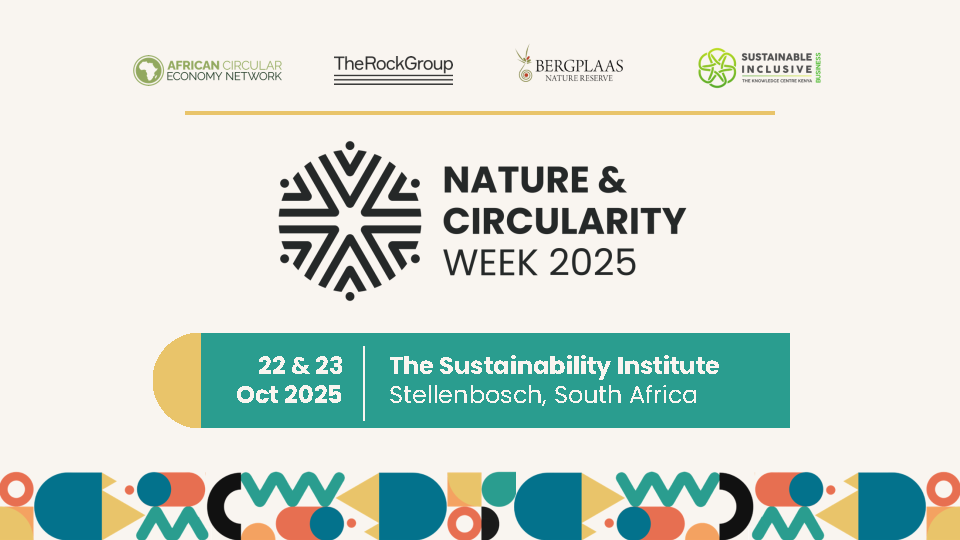
Looking Back at a Transformative Gathering: A Recap of Nature & Circularity Week 2025 In 2025, the sustainability community came together for the incredible Nature & Circularity Week 2025. Held on October 22 and 23, 2025, the inspiring two-day event took place at The Sustainability Institute in Stellenbosch, South Africa. It was a monumental gathering […]

Circularity in Action: Lessons from SIB-Kenya’s Decade of Impact
In this special episode of The Exchange Podcast, we celebrate 10 years of Sustainable Inclusive Business (SIB-Kenya). Project Director Karin Boomsma joins us to demystify the circular economy and discuss how Kenyan businesses are moving beyond traditional CSR toward sustainable, regenerative practices. Highlights from the Episode: Why This Matters As we look toward the future, […]